A VISUAL GUIDE THROUGH PRADO MUSEUM
PROMETHEUS
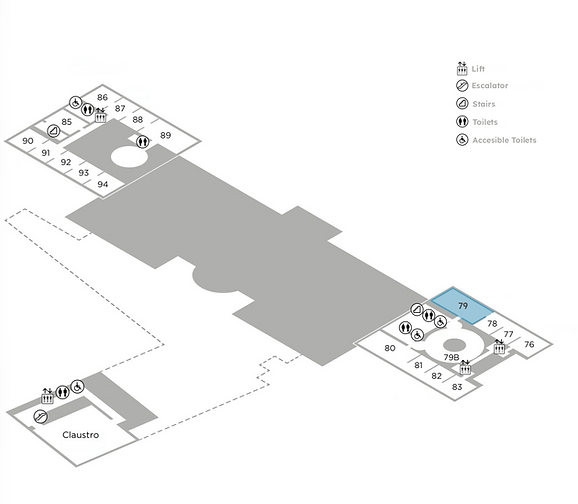
ROOM 079
Floor 2
Rubens


You are looking at a guide about trust. In these paintings, the main idea is how humans created classical myths to explain or compare them with real life. The goal is to teach a moral lesson to the viewer.
This specific painting, "Prometheus", shows us that even among divine beings, the limits between good and evil are not fixed. It demonstrates how the boundaries of justice can become blurred.
Did you know that...
Curiosity 1
This painting, along with many other mythological works, was commissioned by King Philip IV of Spain to decorate the Torre de la Parada (a royal hunting lodge). However, as this work shows, Rubens did not paint every single piece himself; he relied on other talented artists. In this case, the actual painter was Jan Cossiers.
Curiosity 2
Despite this, there have been many debates throughout history about who truly painted this work. It wasn't until 2015, during a detailed study of the painting, that the mystery was finally solved. Experts found the artist's signature hidden on the torch.
Curiosity 3
Even though Jan Cossiers painted the final version, the "creative authorship" still belongs to Rubens. He created the original sketches (drawings) that served as the map for the entire project. Rubens did finish some of the most important paintings himself, such as Saturn Devouring His Son.
Painting audio guide:
Audio made by Miguel Catalán highschool students Celia and Alexandra
Audio transcription:
“In this painting, you can see a strong man wearing a red tunic who appears to be in the sky among the clouds. He's moving as if he were running away from someone. The stormy background with its dark colors give a sense of dynamism. There is a lot of contrast between the background and the clothing, which makes the man stand out. The man is Prometheus. The painting focuses on Prometheus' disobedience, stealing fire from the gods to give it to humans against Zeus' wishes. Fire symbolizes knowledge and civilization. Zeus' defiance represents sacrifice for the well-being of humanity, rebellion, progress, and the consequences of challenging divine power. This painting is in the Prado Museum and was painted between 1636 and 1638 by Rubens. It measures 182 centimeters high and 113 centimeters wide. The material used is oil on canvas. It is relevant in philosophy because of the transition from the myth to logos. According to Hesiod, the myth of Prometheus began when Prometheus tricked Zeus during a sacrifice, making him believe that the bones covered in fat were the best part of the animal. Since then, men have kept the meat and the gods have kept what is not eaten. As a result, Zeus became angry and hid the fire. Prometheus stole it and gave it to humans, creating civilization (and barbecues, probably). Zeus, tired of Prometheus' tricks, planned his ultimate revenge. He punished Prometheus, sending an eagle to eat his liver every day. Zeus also punished humanity, creating Pandora, a beautiful woman who carried with her a box filled with all the evils of the world. When Pandora opened it, we know what happened: all humans were suffering."
To know more follow...
@here.you_art